Do Posture Correctors Really Work? Physical Therapists Explain
Michael Chang ·
Listen to this article~5 min
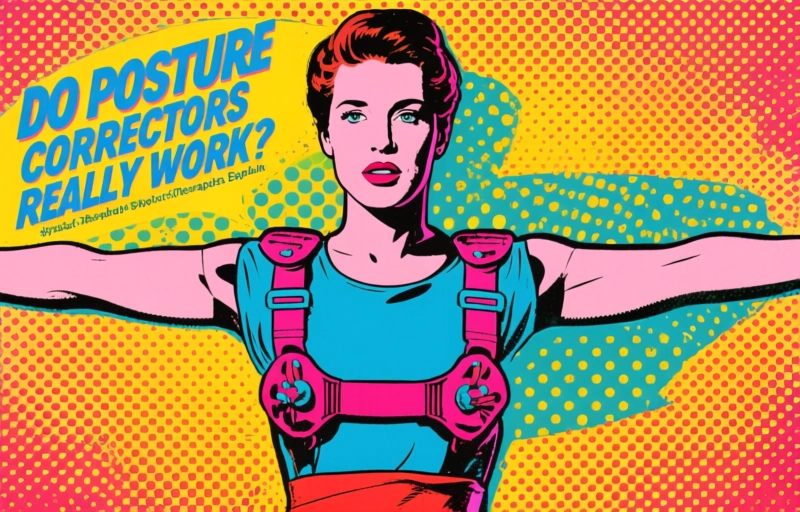
Physical therapists reveal whether posture correctors actually fix slouching or just create dependency. Learn the limitations and discover a better approach to improving your posture long-term.
You know that feeling. You're sitting at your desk, and suddenly you realize your shoulders are up by your ears and you're hunched over like a question mark. We've all been there. And with so many posture correctors on the market promising to fix our slouch, it's tempting to think there's a quick fix.
But do these devices actually work, or are they just another wellness fad? I spoke with several physical therapists to get the real story. Their insights might surprise you.
### What Posture Correctors Actually Do
Let's start with the basics. Most posture correctors are wearable devices—think straps, braces, or smart shirts—that gently pull your shoulders back. They create a physical reminder to sit or stand up straight. The idea is simple: wear it for a few hours a day, and over time, your muscles will 'remember' the correct position.
One physical therapist put it this way: "They're like training wheels for your posture. They provide support and feedback, but they don't teach you how to ride the bike."
The key word here is *feedback*. These devices make you aware of when you're slouching. For someone who spends 8+ hours at a computer, that awareness alone can be valuable. But here's the catch: awareness isn't the same as strength.
### The Limitations You Need to Know
This is where things get interesting. Physical therapists agree that posture correctors have one major flaw: they're passive. You put them on, and they do the work for you. Your muscles don't actually get stronger.
Think about it like this. If you use a back brace to lift heavy boxes every day, your core muscles never learn to engage properly. The same principle applies here. Relying solely on a corrector can lead to muscle weakness over time.
Here are the main limitations therapists highlighted:
- They don't address muscle imbalances
- They can cause skin irritation with prolonged wear
- They may create dependency if used as a crutch
- They're often uncomfortable for all-day use
### A Better Approach to Better Posture
So if posture correctors aren't the magic solution, what is? The therapists I spoke with emphasized a multi-faceted approach. It's about building habits, not just wearing a device.
First, focus on ergonomics. Set up your workspace so your monitor is at eye level, about an arm's length away. Your feet should be flat on the floor, with knees at a 90-degree angle. This simple setup costs nothing but makes a huge difference.
Second, incorporate movement breaks. Set a timer for every 30 minutes. Stand up, stretch, walk around for 60 seconds. Your body isn't designed to stay in one position for hours.
Finally, build strength where it matters. Weak back muscles and tight chest muscles are common culprits behind poor posture. Here are three simple exercises you can do anywhere:
- Shoulder blade squeezes: Sit tall and squeeze your shoulder blades together for 5 seconds
- Chin tucks: Gently draw your chin backward without tilting your head
- Doorway stretches: Place forearms on door frame and gently lean forward
### When Posture Correctors Can Help
Now, I'm not saying posture correctors are useless. They can be helpful in specific situations. Physical therapists mentioned they might be beneficial for:
- Short-term use during activities where you tend to slouch
- Providing initial feedback if you have zero body awareness
- Temporary support after certain injuries (with professional guidance)
The consensus was clear: use them as a tool, not a solution. Wear one for an hour while working to remind yourself to sit tall. Then take it off and practice maintaining that position on your own.
### The Bottom Line from Physical Therapists
Here's what it comes down to. Good posture isn't about sitting perfectly straight all day. It's about movement, strength, and awareness. No device can give you those things—you have to build them.
One therapist shared this perspective: "I'd rather see someone spend $50 on a few physical therapy sessions than $100 on a posture corrector they'll stop using in a month." The investment in professional guidance pays dividends in long-term health.
Remember, your posture didn't develop overnight, and it won't fix itself overnight either. Be patient with the process. Listen to your body. And if you do try a posture corrector, think of it as a temporary aid, not a permanent fix.
The real work happens when the device comes off. That's when you're building the strength and habits that will serve you for years to come.