Top Gaming Motherboards for 2026: Socket & Chipset Guide
Michael Chang ·
Listen to this article~4 min
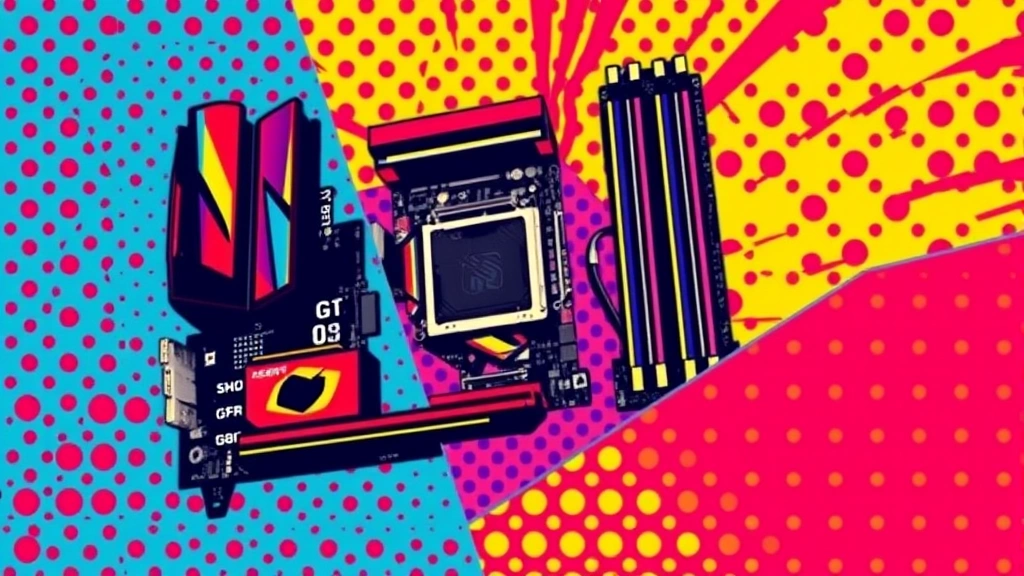
Navigate the 2026 motherboard landscape for your gaming PC build. Our guide breaks down sockets, chipsets, and key features to help you choose the perfect foundation for Intel and AMD systems.
Hey there, fellow PC builder. Let's talk about the heart of your gaming rig—the motherboard. It's the unsung hero that ties everything together, and choosing the right one for 2026 can feel overwhelming. Don't worry, we'll break it down together, just like we're chatting over coffee.
Think of the motherboard as your PC's central nervous system. Every component plugs into it, and it dictates what you can upgrade later. Getting this choice right means a smoother build and a system that lasts.
### Understanding Sockets and Chipsets
First things first, you need to match your CPU. That's where the socket comes in. For 2026, Intel's LGA 1851 and AMD's AM5 are the main players. The socket is the physical slot your processor fits into—get this wrong, and nothing works.
The chipset is the motherboard's brain. It controls how all the parts talk to each other. A higher-end chipset, like Intel's Z890 or AMD's X870, unlocks more features. We're talking better overclocking, more USB ports, and faster PCIe lanes for your graphics card and storage.
### What Makes a Great Gaming Motherboard in 2026?
It's not just about raw specs. You want a board that balances performance, features, and value.
- **Power Delivery (VRM):** This is crucial. A robust VRM system delivers clean, stable power to your CPU, especially important for high-end gaming chips. Look for motherboards with quality power phases and good heatsinks.
- **Cooling:** Those VRMs and M.2 SSDs get hot. Effective heatsinks and fan headers for case airflow are non-negotiable for sustained performance.
- **Connectivity:** How many USB ports do you need? Do you want blazing-fast Wi-Fi 7 and 10 Gigabit Ethernet? Make a list of your must-have ports and wireless standards.
- **PCIe 5.0 Support:** This is the new standard for 2026. It offers double the bandwidth of PCIe 4.0, future-proofing your system for next-gen graphics cards and NVMe SSDs. Most new boards will have at least one PCIe 5.0 x16 slot for your GPU and one M.2 slot for storage.
### Finding Your Perfect Match
Your choice depends heavily on your budget and goals. Are you building a no-compromise flagship rig or a savvy mid-range powerhouse?
For the enthusiast who wants every bell and whistle, flagship boards with the top-tier chipsets are the way to go. They offer the best power delivery for overclocking, premium audio codecs, and the most expansive connectivity. Expect to invest around $400 to $600 for these feature-packed foundations.
Most of us are building in the sweet spot. The good news? The mid-range in 2026 is incredibly strong. Boards using chipsets like Intel's B860 or AMD's B850 offer fantastic performance for gaming, often including PCIe 5.0 support, without the flagship price tag. You can find excellent options here between $200 and $350.
As one seasoned builder put it, 'Spend on the features you'll actually use. A $250 board with great VRMs often games just as well as a $500 one.'
### Final Thoughts Before You Buy
Take a breath. Read reviews from trusted sources. Check the QVL (Qualified Vendor List) for memory compatibility if you're buying high-speed RAM. And most importantly, think about your upgrade path. Choosing a motherboard with a modern socket and chipset means you can likely drop in a newer, faster CPU in a year or two without changing everything else.
Building a PC is a personal journey. Your motherboard is the foundation. Pick one that not only fits your CPU today but also supports the gaming adventures you have planned for tomorrow. Happy building!