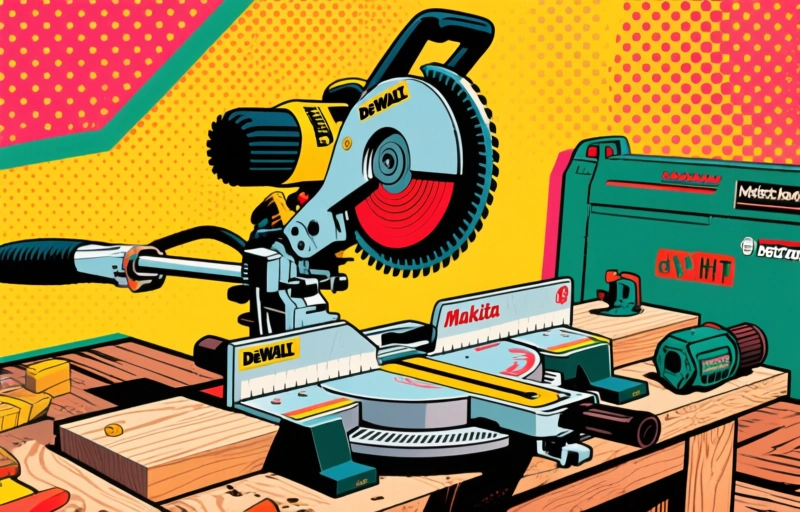
Find the best miter saw for woodworking, contracting, or DIY projects in 2026. Compare top models from DeWalt, Makita, Bosch, and Metabo HPT with expert advice on features, pricing, and setup tips.
If you're serious about woodworking, framing, or even weekend projects, a quality miter saw is one of the most important tools you can own. It's the difference between struggling with crooked cuts and breezing through perfect angles every time. Whether you're a contractor on a job site or a DIYer setting up a home workshop, the right saw saves you time, material, and a ton of frustration. Let's break down what to look for in 2026 and which models are leading the pack.
### Why Your Miter Saw Choice Matters
A miter saw isn't just about cutting wood—it's about precision. A sloppy cut means wasted lumber and extra sanding. A good saw delivers repeatable accuracy, so you can focus on the build, not the adjustments. For contractors, speed and portability are non-negotiable. For DIYers, ease of use and safety features top the list. The market has evolved, and today's saws offer better lasers, improved dust collection, and smoother sliding mechanisms than ever before.
### Key Features to Consider
Before you buy, think about your typical projects. Here's what separates a great saw from a good one:
- **Blade size and capacity:** A 12-inch blade cuts deeper and wider than a 10-inch, but it's heavier. Most pros prefer 12-inch for crown molding and wide boards. DIYers often find 10-inch saws more than enough for trim and framing.
- **Sliding vs. compound:** A compound miter saw tilts for bevel cuts. A sliding compound saw adds forward motion for cutting wider stock. If you work with boards over 8 inches wide, get a slider.
- **Dust collection:** Nobody likes breathing fine sawdust. Look for saws with a dust port that connects to a shop vac. Some newer models include built-in dust bags that actually work.
- **Laser or shadow guide:** A laser line shows exactly where the blade will cut. A shadow guide uses a light to cast a shadow of the kerf. Both are helpful, but shadows don't need calibration.
- **Weight and portability:** A lightweight saw around 35 to 45 pounds is easier to haul to job sites. Heavier saws (55 pounds or more) are more stable but stay in the shop.
### Top Picks for 2026
After testing dozens of saws, a few models consistently rise to the top for different needs.
#### Best Overall: DeWalt DWS780
This 12-inch sliding compound miter saw is a workhorse. It cuts up to 16 inches wide at 90 degrees and handles crown molding flat. The XPS cross-cut positioning system gives you a bright shadow line without calibration. It weighs about 56 pounds, so it's not the lightest, but the stability is worth it. Expect to pay around $650.
#### Best for Contractors: Makita LS1219L
Makita's 12-inch dual-slide saw uses a unique rail system that takes up less space behind the saw. That means you can place it closer to a wall. It cuts up to 14 inches wide and has a smooth, consistent action. At 57 pounds, it's built for daily use. Price is roughly $700.
#### Best Budget Pick: Metabo HPT C10FCGS
This 10-inch compound miter saw offers great value for under $250. It cuts up to 9.5 inches wide and includes a laser guide. It's lightweight at only 24 pounds, making it perfect for small jobs and tight budgets. Just know it's not meant for heavy production work.
#### Best for DIYers: Bosch GCM12SD
Bosch's axial-glide system is a marvel of engineering. It uses an articulated arm instead of rails, so the saw takes up almost no space behind it. The 12-inch blade cuts up to 14 inches wide. It's smooth, accurate, and quieter than most. At 65 pounds, it's a shop saw. Price is around $600.
### How to Get the Most from Your Miter Saw
Even the best saw needs proper setup. Always check the blade alignment and square the fence before your first cut. Use a sharp blade—dull blades burn wood and cause tear-out. For fine woodworking, invest in a blade with more teeth (60 to 80) for smoother cuts. For framing, a 24-tooth blade rips through lumber fast.
> "A miter saw is only as accurate as its setup. Spend ten minutes calibrating, and you'll save hours of rework."
Also, don't skip safety. Wear eye and ear protection, and keep your hands clear of the blade path. Many modern saws include electric brakes that stop the blade in seconds—a feature worth prioritizing.
### Final Thoughts
Choosing the best miter saw for 2026 comes down to matching the tool to your projects. A contractor on a busy site needs portability and power. A woodworker in a home shop wants precision and dust control. And a DIYer just wants something reliable that won't break the bank. No matter which camp you fall into, investing in a quality saw pays off with every clean, accurate cut.